Tree Risk Assessment and Cabling in South Bend, IN
South Bend Expert Tree Service assesses risky trees and installs cabling in South Bend, IN, from the old maple over a bedroom to an oak with a crack nobody noticed until spring. An assessment covers the whole tree from the root flare up and ends with a plain plan. We also look at trees in Niles, Buchanan, New Carlisle, Plymouth and La Porte.
Request a quote
Tell us which tree and what worries you about it, and expect a call back.
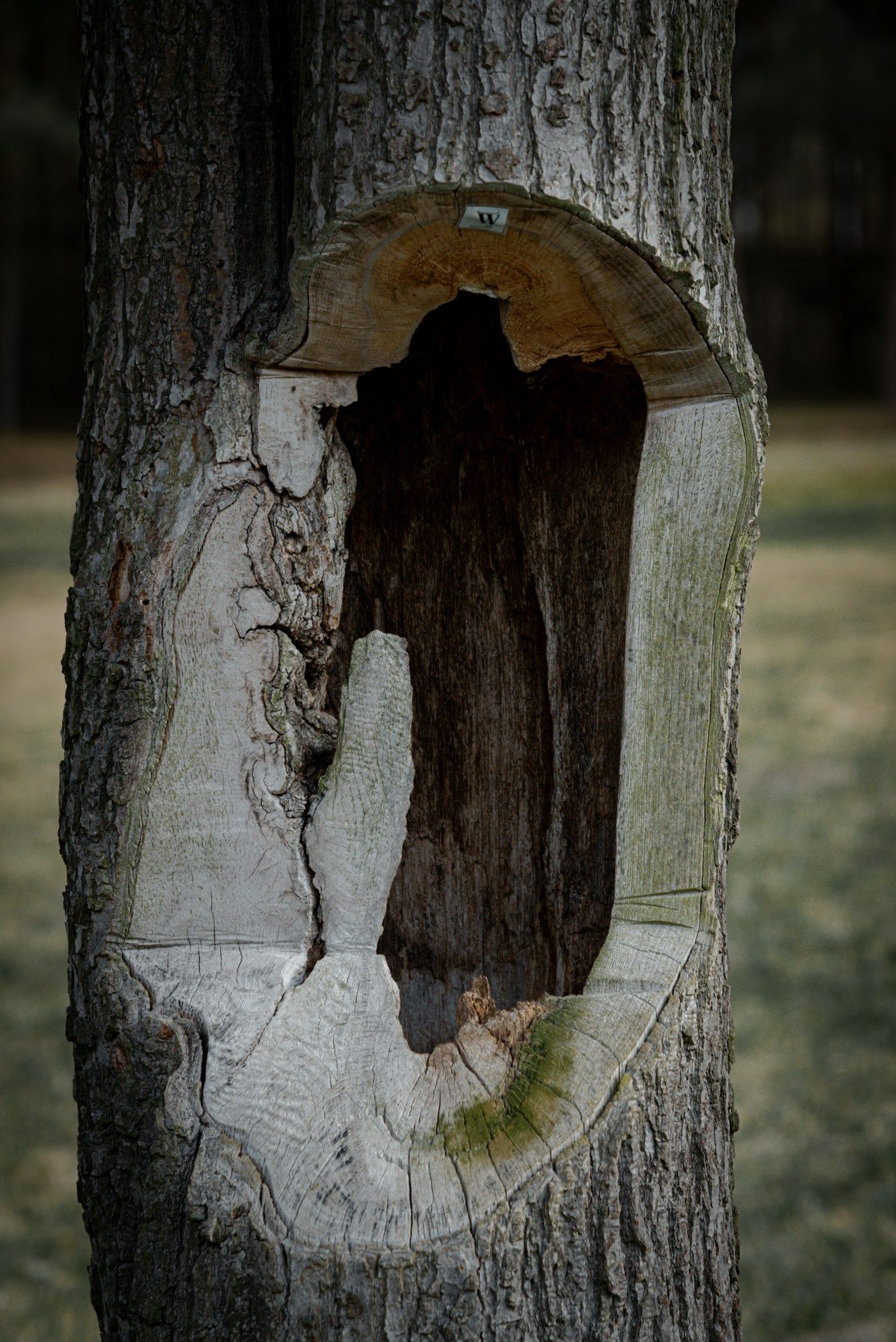
A tree can look alarming but still be sound, or look healthy but still have a hollow core. If anything looks suspicious, an assessment can save you a lot of headaches if trees break or tip over onto structures and end up costing thousands of dollars.
- A full circle around the tree, root flare to crown
- Hollows sounded with a mallet and probed
- Every risk named with what sits in its path
- Cables set two-thirds of the way up from the union
- Cabled trees put on an inspection schedule
Estimate your assessment or cabling cost
Typical prices per tree for South Bend jobs, from the source below. Your quote follows a look at the job.
| Type | Per tree |
|---|---|
| Risk assessment | $100 to $250 |
| Cabling | $200 to $350 |
$100 to $250
Call (574) 406-9782 for your priceAt a glance
| Risk assessment | $100 to $250 a tree |
|---|---|
| Written report | $150 to $450 for one tree; $300 to $700 for several |
| Cabling | $200 to $350 a tree |
| Arborist time | $100 to $250 an hour, usually a one-hour minimum |
| Assessment levels | Level 1 drive-by, Level 2 detailed check from the ground, Level 3 advanced (aerial inspection, decay tests) |
| Dynamic cables | Inspected twice a year |
Tree Risk Assessment and Cabling Services
Tree Risk Assessment
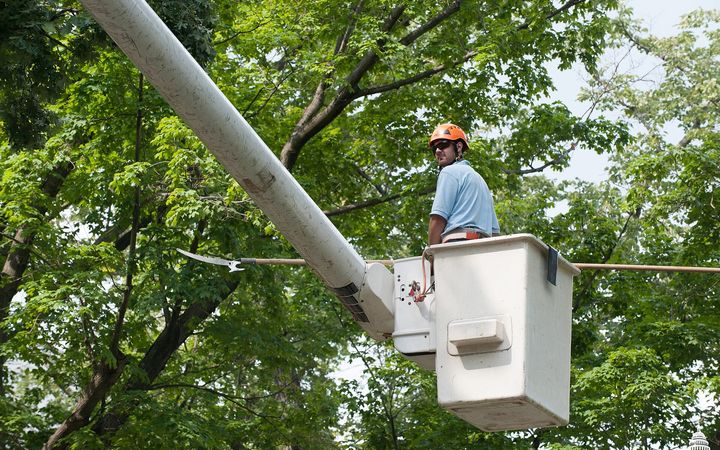
A ground-level look at the whole tree, from the soil at the base to the crown. It ends in a rating, what the tree would hit, and one plan: prune, cable, move the target or remove.
Advanced Decay Testing
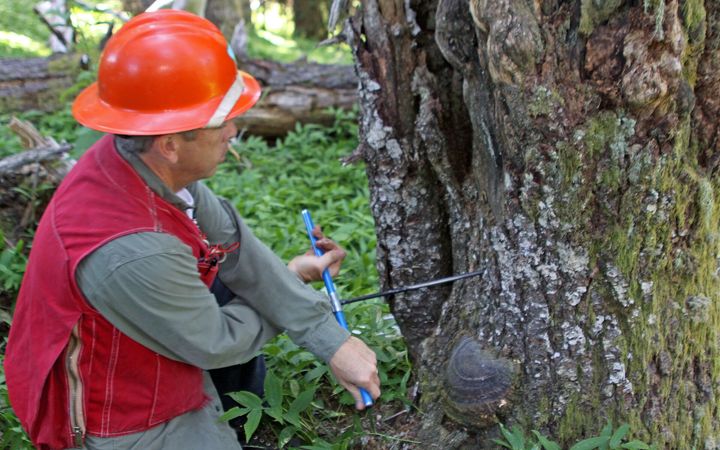
Level 3 goes past an eye and a mallet: decay detection, aerial inspection and wind load. It suits the old oak the house was built around, rarely a 30-foot maple.
Steel Tree Cabling
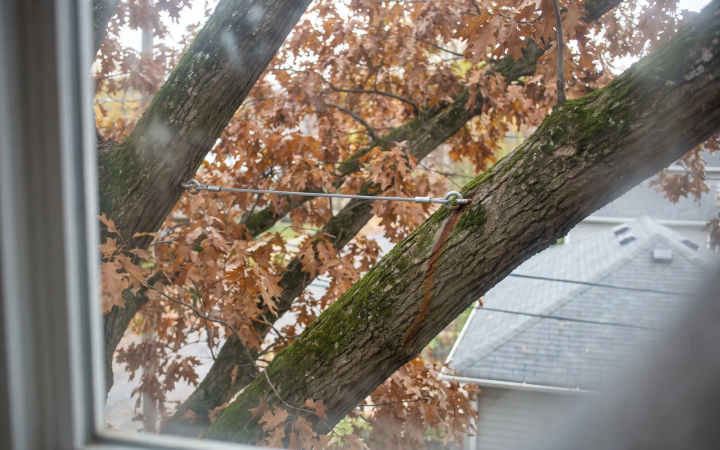
Steel goes in once a union already shows trouble, about two-thirds of the way from the weak union toward the top, on eye bolts, to ANSI A300 Part 3.
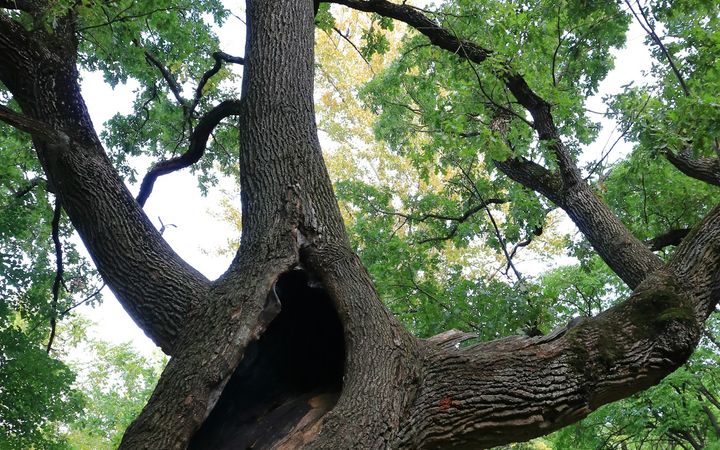
Dynamic Tree Cabling
Synthetic rope lets the stems keep swaying and goes on without drilling. We'd pick it for a young, healthy tree with a narrow V that hasn't cracked yet.
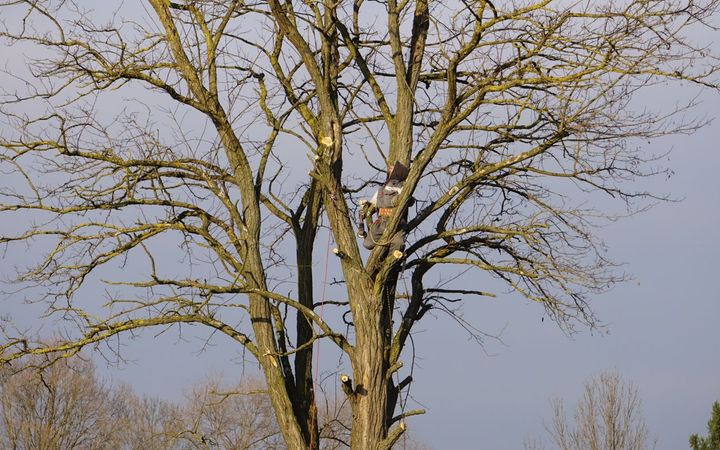
Tree Bracing
A threaded steel rod through a short split, set lower than a cable, keeps the halves from twisting. Once a split reaches the root flare, we'd rather take the tree down.
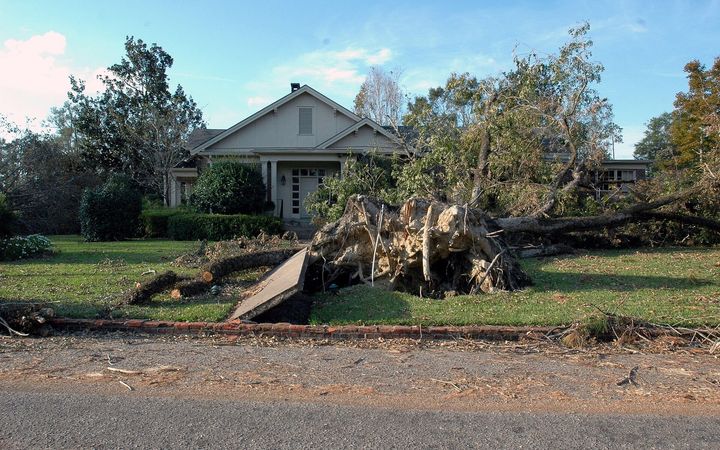
Tree Inspection After a Storm
A union can split inside and not show for weeks. The June 2026 storms dropped several trees near Clay High School. After a wind like that, look up, then look at the soil.
What Happens During a Tree Risk Assessment?
- Start with the target. The house, the drive, the play set, the neighbor’s fence. Where nothing sits in range, a glance is usually enough.
- Read the base. Heaving soil, mushrooms at the flare and roots cut by a driveway count against the roots.
- Sound the trunk. A mallet tells sound wood from hollow, and a probe measures the shell.
- Glass the crown. Binoculars find hangers, dead limbs and bark pinched inside a tight V.
- Rate it and write the plan. The ISA scale runs improbable, possible, probable, imminent. Sometimes the cheapest fix is moving the swing set.
Does Cabling a Tree Work?
On sound wood with one weak union, yes. Cabling suits a keeper whose cracks are all short and whose wood sounds solid. Removal suits one that sounds hollow nearly all the way around, or whose split runs down into the base. We’d rather replace a splitting callery pear than cable it.
What Does a Tree Assessment or Cabling Cost?
National figures put an assessment visit between $100 and $250, and cabling a single tree between $200 and $350. Set against removing a tree from over a roof, those are small sums.
| Job | Range | Priced per |
|---|---|---|
| Risk assessment visit | $100 to $250 | Visit |
| Written report, one tree | $150 to $450 | Tree |
| Consultation, South Bend | $150 to $300 | Hour |
| Tree cabling | $200 to $350 | Tree |
Every row but one: national figures (2026). The South Bend consultation rate: local pros, 2016 to 2023. Market ranges, not our price list.
- Tree count. Covering the whole yard in one report is cheaper per tree than booking visits one by one.
- Level 3 testing. Decay detection or a climb to inspect the crown is billed on top.
- Steel or synthetic. A dynamic system needs its twice-a-year check, a cost that keeps coming.
Tree Risk Assessment and Cabling in nearby areas
Get a quote on your tree risk assessment and cabling
Tell us the species if you know it, roughly how tall it is and what sits under it. Someone rings you back with what the job likely involves and what moves the price.
Tree Risk Assessment and Cabling FAQs
What's the difference between an arborist and a tree service?
An arborist studies how trees grow and why things go wrong with a tree. The state of Indiana does not license either of these, so just saying the title doesn't prove who they are. ISA certification is only voluntary. Always ask anyone who comes out to look at your trees for a certificate of insurance.
Is hiring an arborist for an assessment worth it?
For large trees within reach of the house or a driveway, we believe the answer is yes. An inspection for $100 to $250 could save you upwards of $1,500 for a removal if the tree doesn't need it. For a 15-foot ornamental tree out in the open lawn, we would say no.
How often should a cabled tree be inspected?
A tree cabled with a dynamic rope system should be inspected twice per year. If the cabling was done with steel cable, it's worth a look at least once a year and again after any storm that brings limbs down. The inspection covers the hardware and the wood around it.
Can an arborist save a dying tree?
Yes, sometimes an arborist who knows what they're doing can save a dying tree. Taking out the dead wood, deep watering through a dry summer and pulling the mulch back off the trunk helps a stressed tree tremendously. For trees past these points, your money is better spent on removing them and putting in replacements.
Does the city assess tree lawn trees?
Yes. For a tree in the grass area between the sidewalk and the street, South Bend will issue a permit to trim or remove it. The City Forester will come out and evaluate it first, so you know it's going to be the right move. The permit and the City Forester coming out are all free.
Does cabling hurt the tree?
Steel cabling systems do need holes drilled for eye bolts, but the tree grows wood around them. That small wound is minor next to a stem tearing out of the fork, a wound no tree closes or heals from. A rope system goes on without any drilling, so it does not hurt the tree whatsoever.
Can I check my own tree for risk?
Yes, you can check your own trees for any obvious signs. Rot or heaving soil at the base of a tree, or a lean that is new or steeper than 15°, should definitely be looked at. If you find any of these signs on a tree above a roof or driveway, book a tree assessment right away, before something costly or dangerous happens.
Request a quote
Calling (574) 406-9782 is the quicker way to talk about the tree. Or describe it below and we will ring you back.